
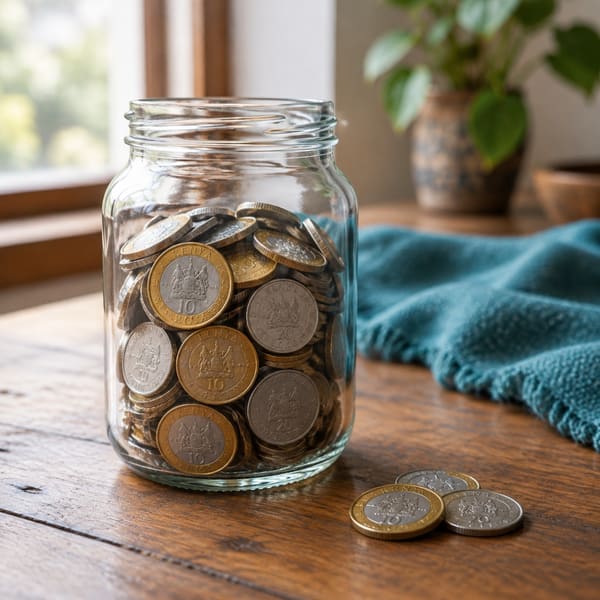



Small amounts plus time. Watch what happens when your interest starts earning interest.
This is financial education, not financial advice. Results are estimates based on the numbers you enter, and any rates shown are illustrative.
How to read your result.
For anyone who wants to see why starting early matters, before choosing where to save or invest.
Balance at the end
Everything you put in plus the interest it earned, assuming a steady rate. Real returns go up and down, so treat this as a picture of how growth works, not a promise.
Your deposits against interest
The columns split your own money from what interest added. In the early years it is mostly you. Later, interest starts doing more of the work.
Simple against compound
Compare the two starting-amount figures. The gap is interest earning interest, and it widens the longer you leave the money alone.
Where to go from here.
Related reading.
The ideas behind this tool, explained properly. Each one takes a few minutes.



Questions people ask.
What is the difference between simple and compound interest?
Simple interest is paid only on the amount you started with. Compound interest is paid on your money plus the interest it has already earned, so the growth speeds up the longer you leave it.
Does compounding frequency matter?
A little. Monthly or daily compounding earns slightly more than yearly at the same rate. Time and the amount you keep adding matter much more.
Are the results guaranteed?
No. The calculator assumes a steady rate, which real investments rarely give. Treat it as a picture of how growth works, not a promise of what you will earn.
Does this include tax?
No. Interest from money market funds, T-bills and bank deposits in Kenya is usually subject to withholding tax. The money market fund calculator shows the after-tax picture.
This is financial education, not financial advice.

Got your number? Let’s talk about it.
The Financial Clinic is a short, free check-in where we look at your actual goals and timelines together. No products to sell you.