



- Home
- Corporate training
Corporate training that turns money stress into a plan.
Salary advances, loan app deductions and worry about school fees all come to work with your people. Fnsoko runs practical financial wellness training for staff, in plain language with Kenyan examples, led by Wanja Waithaka, CPA-K.
Request a proposal
Tell us about your team. We reply within two working days to set up a short discovery call, and the tailored proposal and quote follow soon after.
Prefer email? hello@fnsoko.com
When money is tight, it shows up at work.
Most people were never taught how money works. They learn on the job, often the expensive way. If any of these sound familiar, your team could use a session.
- More requests for salary advances, especially in January and the school fee months
- Loan app and buy now, pay later deductions eating into take-home pay
- Staff unsure what their pension, NSSF or SACCO actually does for them
- People losing savings to offers that were too good to be true
- Questions about money market funds and T-bills that nobody in HR has time to answer
A well-run session will not fix everything, but it gives people the words and the numbers to make a plan, often for the first time.

Taught by someone inside the system.
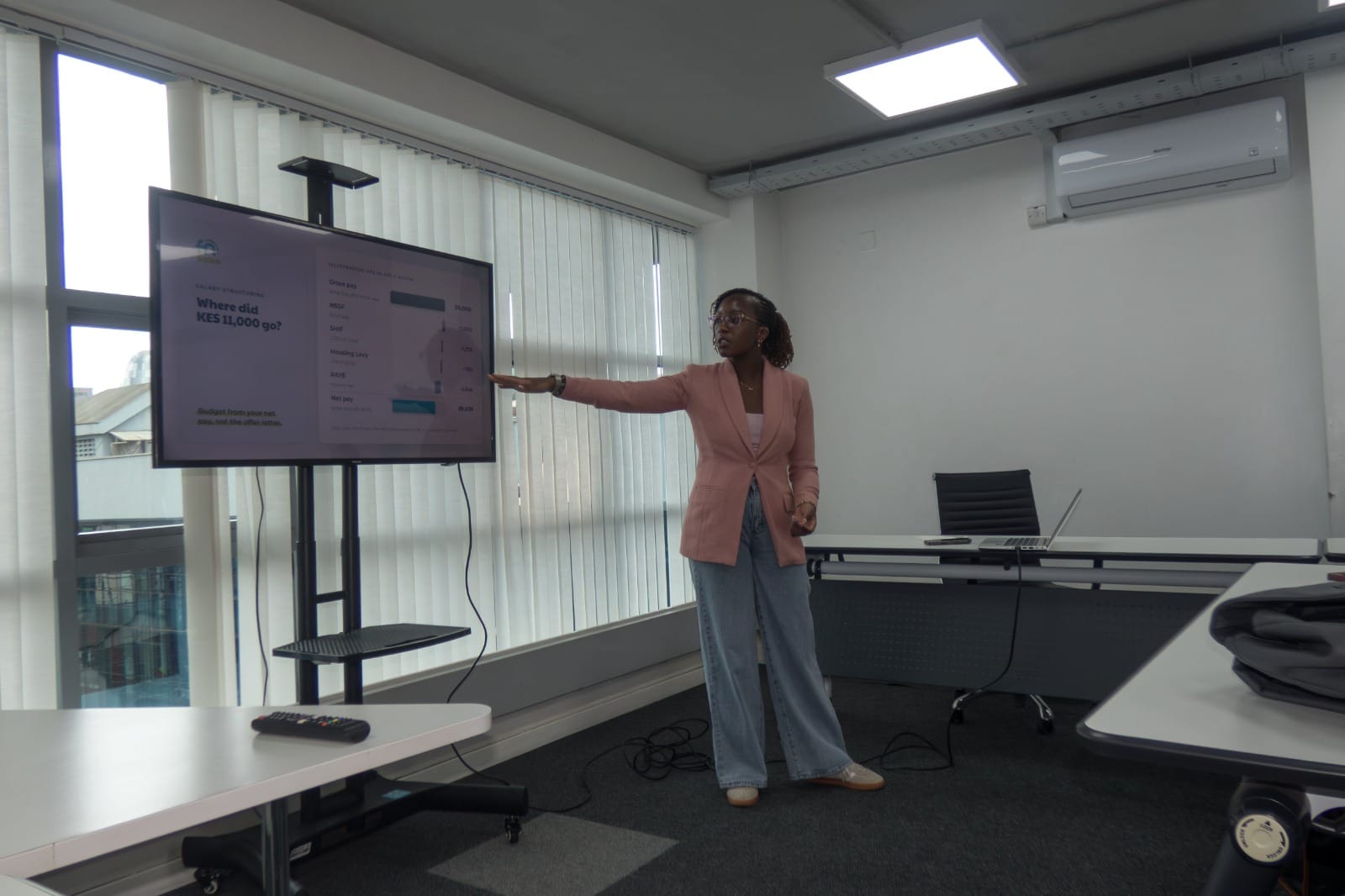
Wanja explains money the way a patient big sister would: calmly, with real stories, and without making anyone feel behind. Her day job is in Kenya’s capital markets, so the investing lessons come from someone who sees these products up close every day.
- CPA-K
- Certified Public Accountant of Kenya, with CIFA in progress.
- Inside capital markets
- Wanja works in Kenya’s capital markets, so the lessons on SACCOs, funds, T-bills and bonds come from inside the system.
- Strathmore and Warwick
- BCom Finance from Strathmore University, then an MSc from the University of Warwick as a WMG Scholar and winner of the Warwick Award.
- A trainer at heart
- Before Fnsoko she trained station teams in the energy sector and represented Kenya on system rollouts across Africa.
Recent sessions.
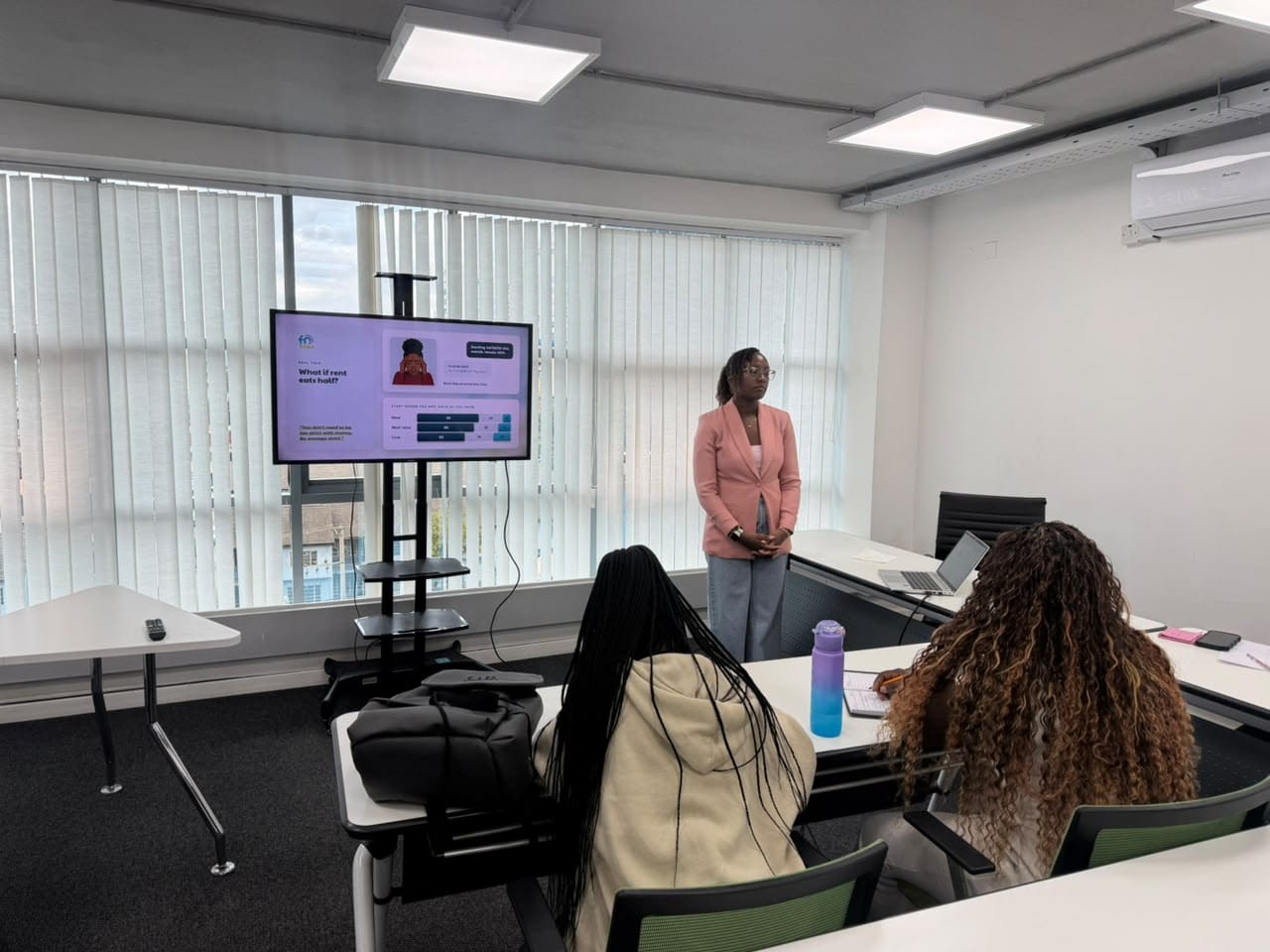
Real rooms, real questions. A few of the places Wanja has taught lately.
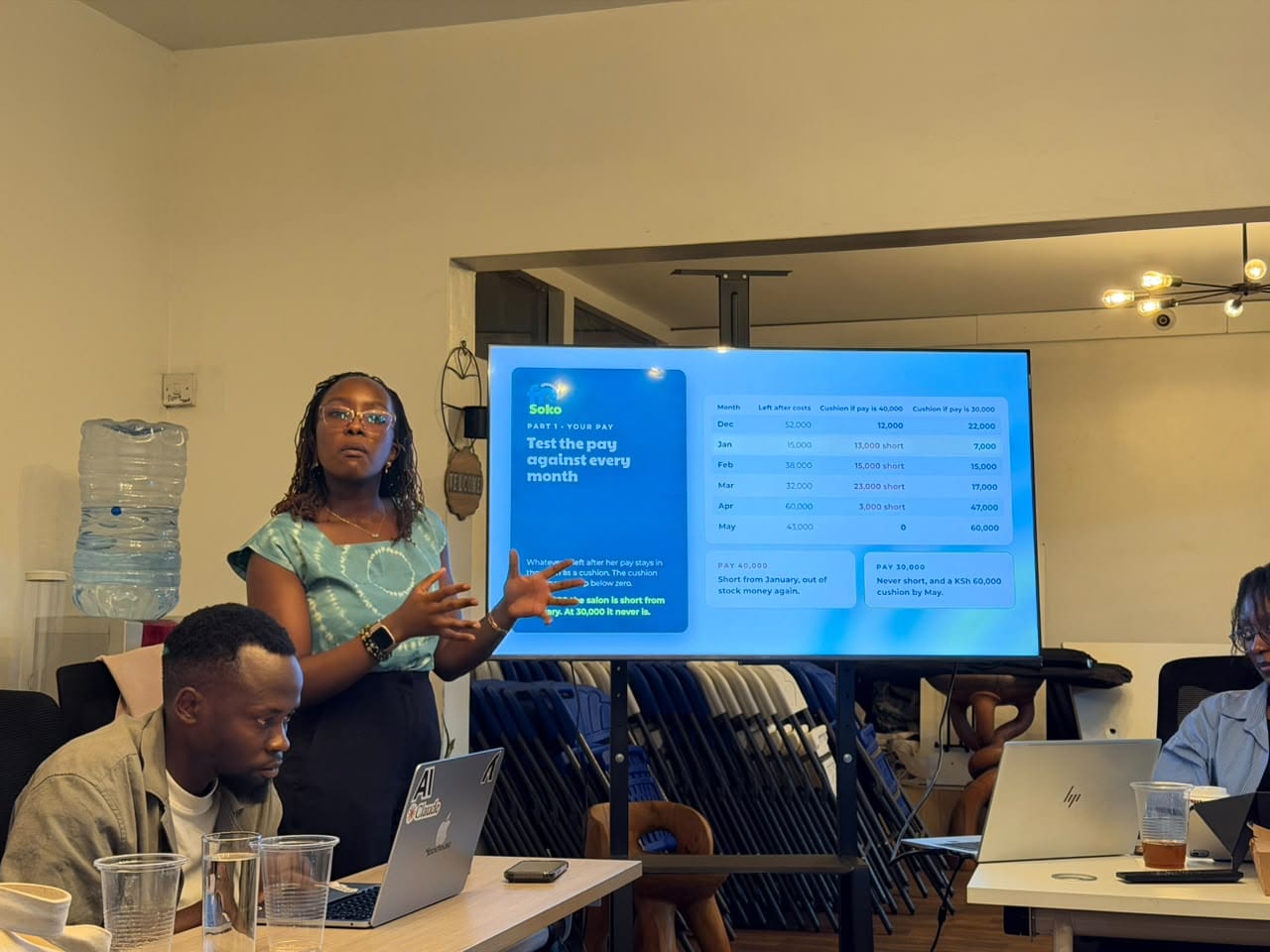
Entrepreneurs at Hackhouse Africa
A hands-on money training for founders: testing pay against every month and building a cushion.
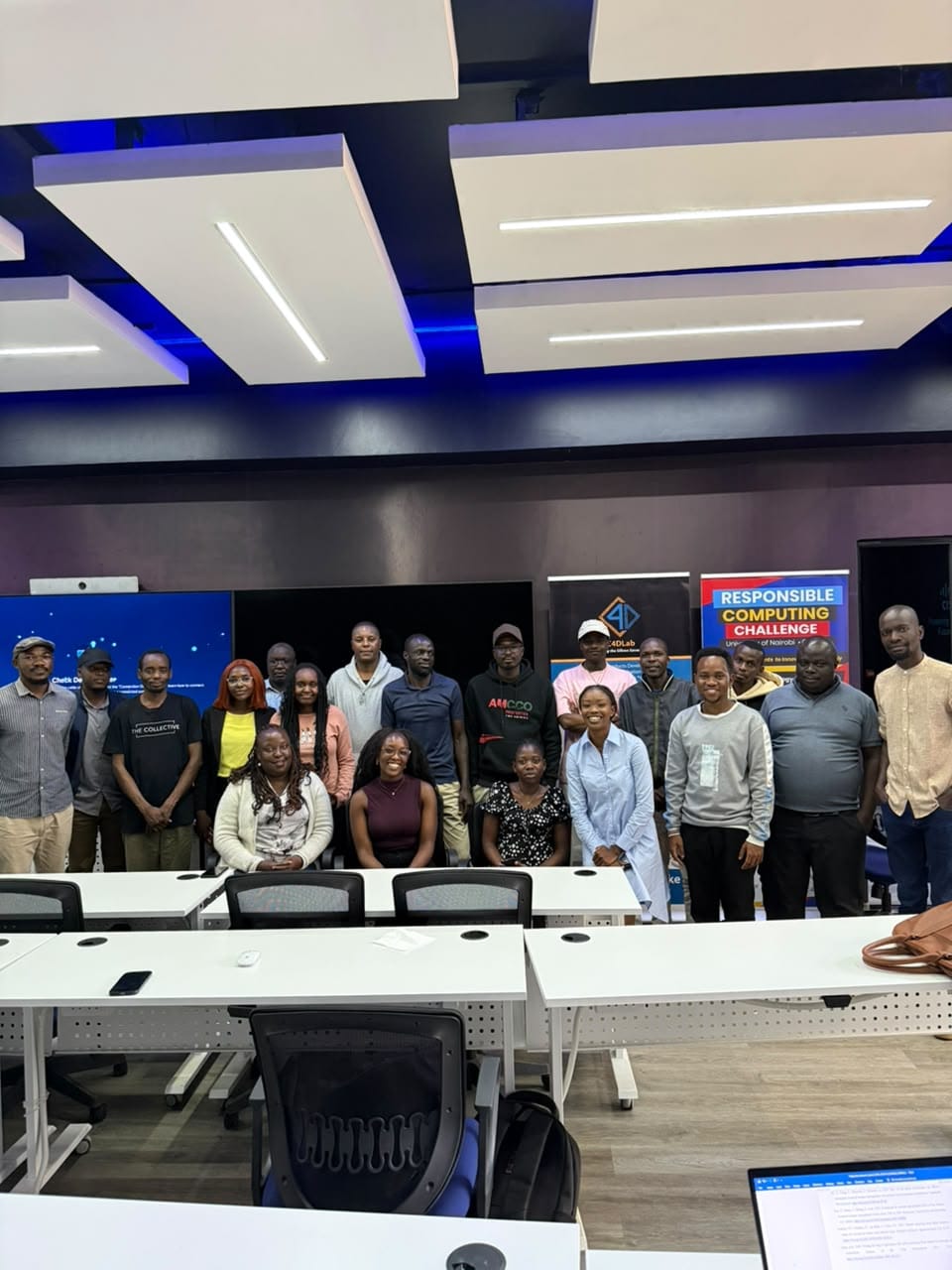
AI Education, Hackhouse Africa and University of Nairobi
Financial literacy for a cohort of young builders in a joint programme by the three partners.
Group and workplace trainings
Plain-language sessions on budgeting, saving and investing, built around real Kenyan numbers.
And the conversations after
The best questions come after the slides. Every session leaves time for them.
7 programmes. Pick what your team needs.
Choose one topic for a lunch and learn or combine several into a workshop or series. Every programme is tailored to your pay cycle, your benefits and your people before we arrive.
Money foundations and budgeting
Where the salary goes between one payday and the next. We build a simple monthly plan around real Kenyan costs and practise the average strict approach: know what comes in and where it goes, without turning life into a spreadsheet.
- Needs, wants and family support
- M-Pesa spending and small leaks
- A budget you can keep for a year
Saving and emergency funds
How big an emergency fund should be, where to keep it so it earns something and stays within reach, and how to save on a payslip that already feels tight.
- Emergency fund targets
- Sinking funds for school fees
- Automating savings
Investing in Kenya: SACCOs, money market funds, T-bills and bonds
What each option is, how it earns, what the risks are and how you actually buy it, including government securities bought directly through the Central Bank. Plain explanations, no product recommendations.
- SACCO deposits and shares
- Money market funds
- Treasury bills and bonds, M-Akiba
Debt, credit and loan apps
How interest really adds up on loan apps, overdrafts, SACCO loans and buy now, pay later. Credit scores and CRB listing explained calmly, with a practical plan for paying debt down.
- The true cost of borrowing
- CRB and credit scores
- A debt payoff plan
Spotting investment cons: the Five Checks
Five questions to ask before any money changes hands: is it licensed, do the returns make sense, how does it make money, who holds your money, and how do you get out. Taught through real stories, including one of Wanja’s own.
- Licensing with CMA, CBK and SASRA
- Red flags in WhatsApp offers
- What to do if you have been conned
Retirement and pensions basics
What your pension scheme and NSSF deductions actually do, how to read a pension statement, and how small, early contributions grow over a working life.
- Reading your pension statement
- NSSF and employer schemes
- Planning for life after work
Money for side hustles and entrepreneurs
Separating business and personal money, pricing so the business makes a profit, keeping simple records and setting money aside for tax. Useful for staff with side businesses and for teams planning life after employment.
- Business and personal money
- Pricing and profit
- Records and tax set-asides
This is financial education, not financial advice. Rates and examples in sessions are illustrative, and we never recommend specific providers.
A format for every calendar.
On-site at your offices, at our Westlands base, or live online for teams across Kenya. Most organisations start with a half-day workshop or a lunch and learn.
Half-day workshop
One or two topics in depth, with exercises and plenty of time for questions. Where most teams start.
Full-day workshop
A complete money reset, from the monthly budget through to investing and spotting cons.
Multi-week series
One topic a week, so people try things between sessions and come back with real questions.
Lunch and learn
A focused talk over lunch. A gentle way to open the money conversation in your organisation.
Virtual session
Live on Zoom, Google Meet or Teams, for remote and multi-site teams across Kenya.
From first call to follow-up.
No preparation needed on your side. You tell us what you are noticing; we do the planning.
Discovery call
A short call about your team, what you are noticing and what you would like to change. No preparation needed.
Tailored proposal
Topics, format, schedule and a clear quote, shaped around your pay cycle, your benefits and your people.
Delivery
Wanja leads the sessions in person or online, with Kenyan examples, simple exercises and room for honest questions.
Follow-up
Staff keep the worksheets and the free Fnsoko tools, and anyone who wants one-to-one help can book a private Financial Clinic session.
What your people leave with, and what you gain.
What staff take away
- A monthly budget they understand and can actually keep
- A plan for an emergency fund, so a bad month does not turn into a salary advance
- A clear picture of SACCOs, money market funds, T-bills and bonds, and how to buy them
- The confidence to question an offer that sounds too good before any money moves
- A realistic plan for the debt they already carry, loan apps included
What you gain as the employer
- A wellness benefit people use, talk about and ask for again
- Staff better prepared for money emergencies before they reach the HR desk
- Better understanding of the pension and benefits you already pay for
- A confidential format: nobody shares their own numbers in the room
- Content shaped around your industry, your pay cycle and your team
Need something to share internally?
The brochure sums up the programmes, formats and how we work, ready to forward to your manager, finance team or wellness committee.
- Staff keep the worksheets and the free Fnsoko tools
- Anyone can book a private Financial Clinic check-in afterwards
- Certificates of attendance for each programme completed
Email me the brochure
Prefer email? hello@fnsoko.com
The questions HR asks first.
Straight answers to what usually holds a booking up. If yours is not here, ask it in the proposal form.
We cannot take people off the floor for a day.
Then do not. A 45 to 60 minute lunch and learn, or a weekly series of short sessions, fits around shifts and month-end. Virtual sessions work for teams on the road.
Our staff range from interns to directors.
We ask about seniority and pay levels before the proposal and pitch the examples accordingly, or split cohorts so each group gets the session it needs.
Will this turn into a product pitch?
Never. Fnsoko is education only. We do not sell or recommend investment products, and nobody from a bank, fund or app is in the room.
How much does corporate financial wellness training cost?
Every training is quoted per team. The price depends on the format, the number of people, the location and how much tailoring you need. Send a proposal request and you will get a clear quote with the proposal, with nothing hidden.
How long are the sessions?
Anything from a 45-minute lunch and learn to a full-day workshop, or a series of shorter sessions over several weeks. Most teams start with a half-day workshop on one or two topics.
How many people can attend?
Interactive workshops work best with up to about 40 people, so everyone can take part. For larger teams we run several cohorts or a talk-style session followed by smaller breakouts.
Can you tailor the content to our organisation?
Yes, and we always do. Before the proposal we ask about your pay cycle, seniority levels, the benefits you offer and what you are seeing, such as salary advance requests, loan app debt or questions about pensions.
Can the training be virtual?
Yes. Sessions run live on Zoom, Google Meet or Microsoft Teams, which works well for remote staff and teams spread across several towns. Hybrid sessions are possible too.
Do participants get certificates?
Yes. Participants can receive a Fnsoko certificate of attendance for each programme they complete.
Is what staff share kept confidential?
Yes. Nobody is asked to share their own numbers in the room; the exercises use examples. One-to-one Financial Clinic sessions stay private between the staff member and Fnsoko, and individual details are never reported back to the employer.
Will you sell financial products to our staff?
No. Fnsoko sessions are education only. We do not sell or recommend investment products, and the session is never used to pitch anything to your staff. People learn how to compare options and decide for themselves.